
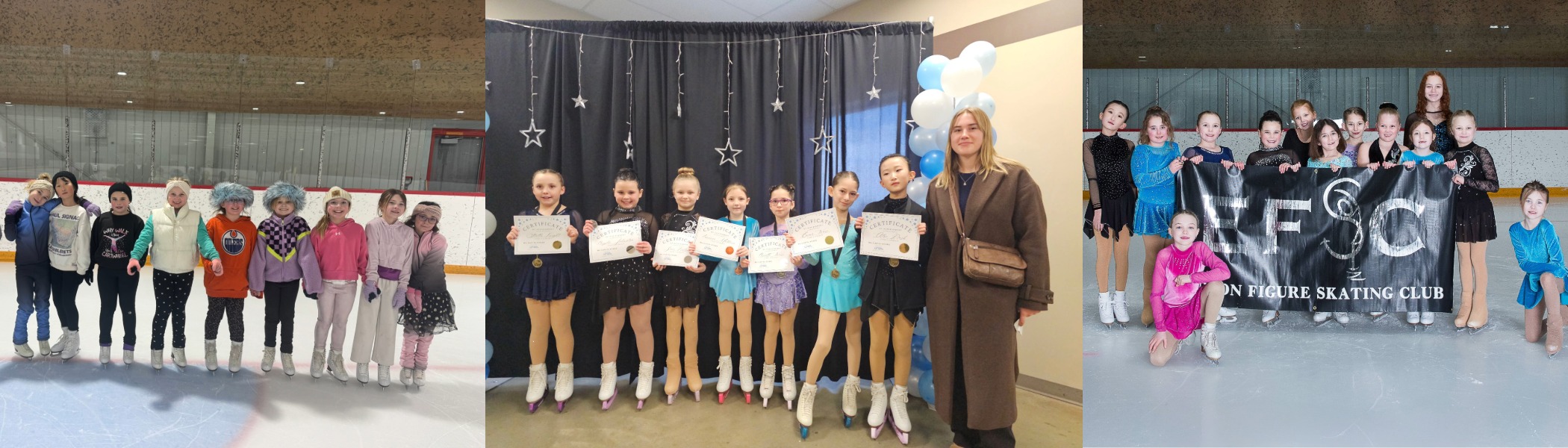
Primary
The Primary Program introduces skaters to the fundamentals of figure skating in a fun and supportive environment. Skaters learn proper techniques for spins, jumps, and edges while continuing to build on their skating foundation. This program also incorporates off-ice training to support strength, flexibility, and coordination. Once a week, skaters participate in an off-ice class that focuses on developing jump techniques, balance, and artistry, ensuring a well-rounded approach to figure skating development. Invitation by coaches for skaters in the Canskate and or Advanced CanSkate program for those showing exceptional aptitude and or a strong desire to become a figure skater.
STARSKATE
What does it mean to move up to StarSkate?
It means that your skater has mastered many of the CanSkate program criteria and is at a minimum
CanSkate stage 3-4 (attained forward crossovers, backward skating, stopping, turning
forward/backward, learning backward crossovers). In StarSkate, skaters are learning the components of
figure skating from a private lesson coach. In some Skate Canada clubs, a Group StarSkate program may
be offered where the CanSkaters can transition into working independently.
WHAT WILL SKATERS LEARN?
Group StarSkate
Skaters will learn about Free Skate, Skating Skills, Dance, Interpretive and Synchronized Skating in a
group program. Each of these disciplines will be taught by Skate Canada Professional Coaches and
assisted by trained Program Assistants.
Private Lesson StarSkate
In the private lesson setting, a coach of your choice will be working with your skater. It is up to you as a
parent to arrange for these lessons. Private lesson coaches coach the following disciplines:
FREE SKATE
The focus of the Freeskate discipline includes the development of jumps, spins, and Program
Components. Freeskate combines the artistry of our sport with the technical aspect. Skating
skills such as turns, edges and power serve as a base for the performance of jumps and spins.
Musicality, expression, and performance are developed through Freeskate Programs.
SKILLS
The focus of the discipline of Skills is the development of edge and turn technique using “figure
form"; power and rhythm in skills exercises; and balance, strength and flexibility in field moves
DANCE
The focus of the Dance discipline includes the development of skating technique while
promoting timing, accuracy and musicality through pattern dances. Pattern Dances involve the
skating of prescribed Patterns to music with a defined Rhythm and Tempo. The Gold Rhythm
Dance combines skating skills such as turns, edges and power with timing, expression and
creativity. The aspects developed through Dance assessments benefit every discipline in
skating.
ARTISTIC
The focus of the Artistic discipline is the development of program components, musical
movement and creativity. Artistic combines skating aspects such as turns, edges and field
moves, with creative spins and the ability to project emotion and artistry. The aspects
developed through Artistic assessments benefit every discipline in skating.
WHAT IS AN ASSESSMENT?
Assessments will occur in the skater’s natural training environment, during their regular lesson time.
This may take place in a group, semi-private or private lessons.
WHAT IF MY CHILD WANTS TO COMPETE?
Many skaters will become interested in competing and there are many competitions in each region that
your child could attend. Depending on their level, your child will enter the Skate Canada Star 1-5
program and compete with children at the same age and ability. Entry levels are assessed to standard,
and higher levels compete for a ranking. The decision to compete is generally made in conjunction with
a Skate Canada Professional Coach. They will be able to provide you with detailed information on how
competitions will work and what will be expected of both the skaters and parents.
WHAT ABOUT EQUIPMENT?
Proper equipment is essential in ensuring your skater has a safe and enjoyable skating experience.
HELMETS
All skaters must where a CSA approved helmet until they have passed their Stage 5 CanSkate badge.
Skate Canada Professional Coaches will assess your child throughout the session and let you know when
they are ready to remove their helmet. More information about helmets can be found in the Skate
Canada Helmet Use Policy Safe Sport Guide (skatecanada.ca)
Helmets can be purchased at: www.canadiantire.ca
SKATES
Group StarSkaters will be learning basic figure skating skills. It is important that your child have a proper
fitting pair of figure skates to be successful with these new skills. Skates that are too big, too small or
without proper support will make skating more difficult for your young athlete. If you have questions
about skates, please speak with a Skate Canada Professional Coach about proper fit and support.
ATTIRE
Clothing should enable skaters to use their full range of motion and allow them to perform jumps, spins
and other skating skills without restriction. Skaters should dress in layers so that they can adjust their
clothing if they are too hot or too cold. Female skaters should wear a skating dress or yoga attire, warm
tights, leg warmers, sweater and mitts/gloves. Hair should be pulled back away from the skater’s face.
Male skaters should wear running or yoga attire, sweater and mitts/gloves
SPECIAL OLYMPICS ALBERTA
Special Olympics Alberta offers sports programs (including figure skating) in more than 100
communities around the province for Albertans with an intellectual disability. Special Olympics
promotes an active lifestyle and better quality of life for persons with intellectual disabilities through
their participation in sport. Special Olympics Alberta is an accredited chapter of Special Olympics
Canada.
http://www.specialolympics.ca/alberta
Contact your local skating club to see if an inclusive skating program is offered for athletes with any
physical or intellectual disability.
Equipment Breakdown
- Figure Skates: Skaters must wear high-quality figure skates (no recreational skates). Proper fit is essential—consult with your coach for recommendations.
- Blade Guards: Hard guards to protect blades while walking off the ice.
- Clothing: Fitted, flexible clothing is required. Long sleeves, leggings, or skating dresses are ideal. Avoid bulky coats or hooded sweaters.
- Helmet: A CSA-approved helmet is required for skaters prior to assessment
- Hair: Hair must be neatly tied back to avoid distractions.
- Off-Ice Gear: Proper running shoes and a water bottle are necessary for off-ice classes.